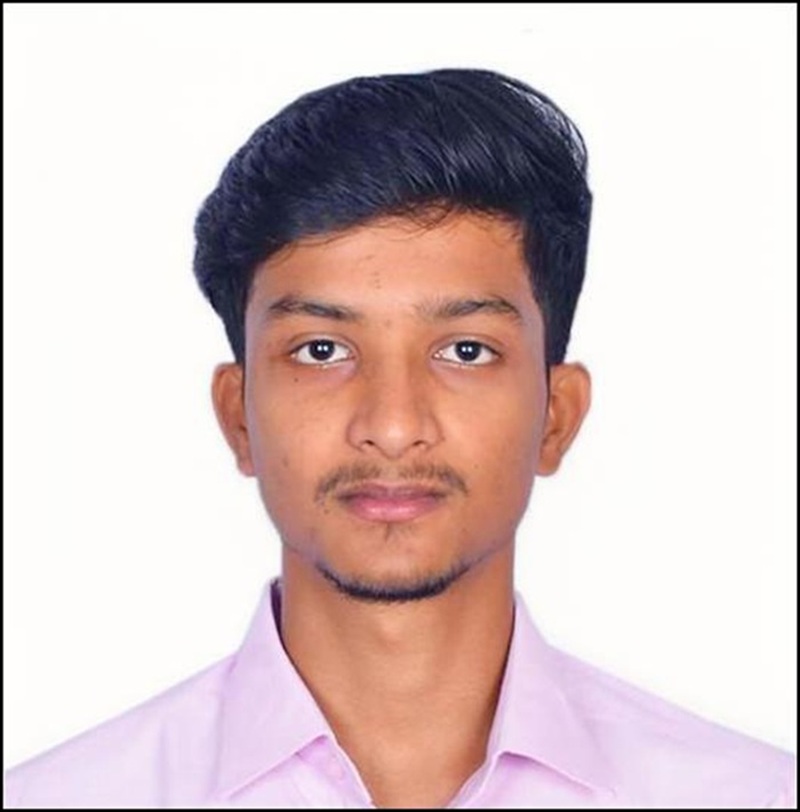
Ankit Kumar
Undergraduate Systems Researcher & Software Engineer
Applied ML & Computer Vision • Confidential Computing • Edge AI • Scalable Architecture
Research & Systems Engineering
I build applied machine learning and computer vision systems, from detection and segmentation models to LLM-backed platforms, and engineer the secure, high-performance infrastructure to run them in production. My work spans confidential computing, edge AI, and distributed systems.
My work bridges the gap between academic research and industrial execution, spanning applied deep learning, hardware-rooted security, optimization models, and high-concurrency web platforms with experience across the United States, the United Kingdom, and India.
Read my full story & philosophyAcademic Trajectory & Systems Focus
My academic path is defined by a strong upward trajectory in advanced systems engineering and computer science coursework. In my recent semesters, I pushed my performance to score consecutive 8.79, 9.00, and 8.65 SGPAs, demonstrating a clear alignment between theoretical academic rigor and hands-on systems implementation.
Current Research & Engineering Problems
Active open problems, system constraints, and theoretical puzzles I am currently exploring:
“How can we protect YOLO execution and motion matching Kalman loops from physical side-channel compromises on remote edge nodes without relying on power-hungry TPMs or active cloud links?”
“How do distributed ad-hoc mesh networks establish and verify computational integrity signatures when nodes must run entirely offline in denied cyber-physical zones?”
“Can we leverage reinforcement learning policies to automatically generate availability and distance pruning heuristics for integer solvers like CP-SAT, avoiding hand-crafted matrix structures?”
Research Chapters
Explore full papersIntel SGX Enclaves
Secure Computing
Programmed ECALL/OCALL runtime isolation for document indexing. Measured Enclave Page Cache (EPC) limits on Azure DCsv2/DCsv3 VMs.
Optimization & OR
Decision Support
Engineered scheduling constraint solvers using Google OR-Tools CP-SAT. Applied spatial distance heuristics to output allocations in <2.3s.
Secure Geo-Systems
Offline Intelligence
Won SIH National Title by re-architecting a geospatial platform overnight for zero-connectivity environments.
Reading Influence Map
Annotated bibliography of papers that have significantly shaped my research taste and technical focus:
Shielding Applications from an Untrusted Cloud with Haven
LinkAndrew Baumann, Marcus Peinado, Galen Hunt • OSDI • 2014
Distilling the Knowledge in a Neural Network
LinkGeoffrey Hinton, Oriol Vinyals, Jeff Dean • NIPS Deep Learning Workshop • 2015
Zero-Trust Architecture
LinkAlper Kerman, Oliver Borchert, Rose Rose, Scott Rose • NIST Special Publication 800-207 • 2020
The CP-SAT Solver in Google OR-Tools
LinkLaurent Perron, Frédéric Didier • Operations Research Proceedings • 2022
Research Fields
Confidential Computing & TEEs
Hardware-enforced security primitives (Intel SGX, ARM TrustZone) to build secure computing boundaries in untrusted host environments.
Secure Edge AI
Running deep learning models locally under resource limits (e.g. dynamic INT8 quantization, NCNN, Raspberry Pi deployment) with cryptographic execution verification.
Trustworthy Distributed Systems
Architecting resilient, local-first protocols and decentralized computing frameworks for secure cross-node synchronization.
Cyber-Physical Systems & IoT
Securing operational hardware and command actuation loops (e.g. Arduino, ESP32 platforms) from spoofing, side-channel attacks, or host tampering.
Geospatial Edge Systems
Ingesting, processing, and visualising spatial telemetry pipelines locally without relying on active cloud networks.
Resource Optimization
Applying linear programming, integer constraints, and heuristic pruning tools (Google OR-Tools CP-SAT) to scale orchestration bounds.
Academic Journey
National Sports Representative
Selected to represent the Patna Region as Vice-Captain in the XXIX National Handball Meet (Govt. of India), fostering physical discipline and team coordination leadership.
BMS Mathematics Olympiad
Achieved Rank 4 in the regional Mathematics Olympiad organized by the Bihar Mathematical Society, demonstrating strong foundations in analytics and formal logical formulation.
NAEST National Participant
Selected for the National Anveshika Experimental Physics Skill Test (NAEST) at IIT Kanpur, evaluated under the guidance of Prof. H. C. Verma.
B.Tech in CSE (IoT & Cybersecurity)
Initiated formal study at Heritage Institute of Technology (current CGPA: 8.40), specializing in hardware-software intersections, local networking protocols, and cyber security fundamentals.
TSEC Young Innovator Award
Built 'Jambavantha Irrigation', an IoT-based smart agricultural irrigation system that won the Tata Social Enterprise Challenge (TSEC) Young Innovator Award (top 0.05% out of 6,600+ entries).
NJIT Backend Research (USA)
Completed research exchange at New Jersey Institute of Technology, implementing confidential computing vector pipelines on Intel SGX enclaves and Azure Confidential VMs.
SIH Winner (National Title)
Led backend systems design for a team that won the Smart India Hackathon National Title (Top 0.002% nationally) under a Government R&D category.
Government R&D Internship — UAV Video Intelligence
Built telemetry decoding, geolocation, and multi-modal detection pipelines for a drone video intelligence platform, including a U-Net segmentation model reaching 92.0% validation IoU.
Loughborough Research Visitor (UK)
Collaborating as a Research Visitor at Loughborough University on AI-driven decision support engines using CP-SAT solvers and operations research scheduling methodologies.
TRINETRA — Wildlife Conflict-Alert AI System
Leading a full detection, tracking, and risk-alert system for human-wildlife conflict, using PyTorch-based YOLO11 detection and ByteTrack multi-object tracking.
Ph.D. Research Aspirations
Intending to pursue doctoral research on bridging low-level hardware security bounds (TEEs) with high-level distributed systems optimization for intelligent physical infrastructure.